
The amplifying effect: how including Ubiquitous in your OOH plan enhances campaign performance.
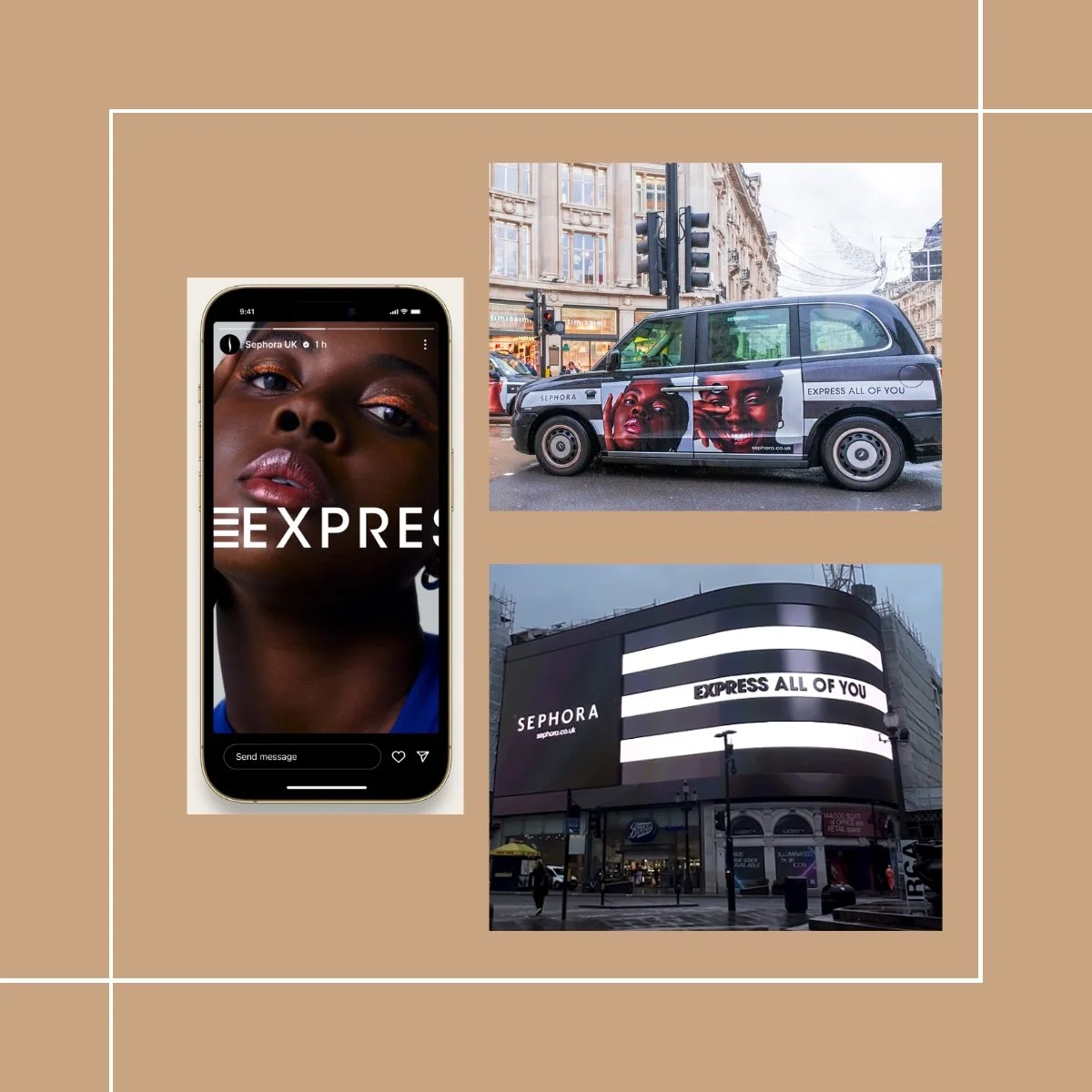
There’s no shortage of choices to make when planning your latest OOH campaign. A new study from our parent company Firefly and their research partners Reveal Mobile has shown that advertisers who paired moving formats like Taxi Advertising with stationary OOH such as billboards enjoyed objectively better campaign performance, with audiences more likely to visit in-store and online.
The Ubiquitous team was pleased to read the research because we’ve witnessed the impact that Taxi Advertising has made in combined format campaigns. Here’s how Firefly has now proved what we have seen anecdotally.
Understanding the method behind the research
The research aimed to understand the performance impact of combining fixed and non-fixed location OOH through three controlled exposure scenarios. It aimed to establish baseline metrics while identifying potential opportunities for future mixed OOH campaigns. Exposure was measured at the Mobile Advertising ID (MAID) level, which uses the unique digits in mobile phones to track the behaviour of the people using them.
The core target groups consisted of:
1. No Exposure: A control group of individuals not exposed to any OOH formats in the campaigns.
2. Stationary OOH Only: Audiences exposed exclusively to fixed location OOH displays (both static and digital).
3. Combined exposure: Audiences exposed to both fixed location and moving advertising during the campaign period.
The study included 10+ markets and multiple demographic segments to ensure that the findings were robust and relevant. The areas included New York City, Boston, Dallas, LA, and other major metropolitan areas.
How was the research measured?
Results were evaluated through foot traffic conversions, which measured how often audiences visited a specific store or venue during the campaign, and digital engagements, which measured the audience’s visits to a specific website or mobile app during the campaign’s timeframe.
Finding 1: Including moving OOH improved campaign performance by 50 to 100%
The research found that audiences exposed to both moving and stationary OOH showed better levels of engagement with brands online compared to those exposed to stationary formats in isolation. Users exposed to the combined OOH campaign were 99% more likely to visit the advertiser’s website compared to unexposed control groups.
The findings echoed the Ubiquitous team’s experience assisting Sephora with their multi-format campaign in major cities around the UK. Sephora used taxis along with a network of captivating roadside screens, posters, and social media channels. Attest research post campaign supports Firefly’s conclusions on engagement and intent among audiences exposed to multi-format campaigns. Among those who recalled seeing Sephora advertised on taxis, purchase intent was recorded at an impressive 84%. It suggests a positive association between Taxi Advertising and purchase intent for Sephora (1).
IPA Databank research conducted by Peter Field and Rapport also points to the multiplying effect of combined format campaigns. It’s been found to boost the effects of other media channels like search (+54%), social (+20%), and of course, TV (+17%) too (2). The Sephora campaign proves why the impressive reach, frequency, and exposure of Taxi Advertising doesn’t just make brands look their best. It brings out the best in each individual format too.
Point 2: A person exposed to both stationary and moving OOH formats was up to 2.5x more likely to follow up with a store visit compared to an unexposed individual
The second major finding observed that audiences exposed to the combined OOH campaign were 2.5 times more likely to visit a store than the unexposed control groups. It suggests again that the power of mixed format campaigns lies in its ability to prompt measurable, real-world action.
Taxi Advertising’s contribution to Adobe’s media plan for the launch of their web app, Adobe Express, is a powerful example of how multiple formats are greater than the sum of their parts. With a campaign across a strategic network of attention-grabbing large format digital screens in Central London, the campaign was perfectly paired with a format known for the mental recall it inspires (3). Attest research completed post campaign concluded that recalling the branded taxi correlated with a higher likelihood of using Adobe Express in the future. In fact, 86% of taxi recallers were likely to use it in the future (4).
Taxi Advertising offers more than just a bold canvas. It’s a strategic format with endless combinations for those keen to push the boundaries of their messaging strategy.
Recommendations for industry: Where to next?
There were plenty of recommendations offered by Firefly and Reveal Mobile post-research for advertisers, media owners, agencies and planners:
Improving frequency of messaging through the inclusion of moving OOH.
Consciously investing in advertising inventories to provide a combination of different formats. This included a recommendation to review pricing for mixed-format campaigns to reflect its value.
Preparing clients for a change in strategy: This was part of a wider recommendation to expand the knowledge base of integrated OOH campaigns.
The recommendations allow us to conclude this article on a positive, yet definitive note. It’s a pleasure to read research that confirms how each format elevates one another when used together. Altug Simsek, Chief Business and Strategy Officer at Firefly agrees.
“Advertisers shouldn’t think of billboards or moving OOH in isolation… Together, they work as a force multiplier. By integrating our moving formats like digital taxi tops with traditional stationary OOH, brands get measurable amplification that can’t be achieved with stationary alone.”
Simsek’s statement reflects an impactful change in mindset for the advertising industry and a significant step forward in understanding the potential of integrated OOH media strategies. It is also representative of the OOH industries continued investment in innovative technologies that benefit brands, agencies, planners, and of course, the audiences that engage with those advertisements every day.
Interested in reading the Firefly whitepaper? You can download a digital copy here.
1. Attest research for Sephora, 2025
2. IPA Databank, Peter Field & Rapport Analysis
3. Attest research for Roberto Cavalli, 2024
4. Attest Research for Adobe Express, 2025