
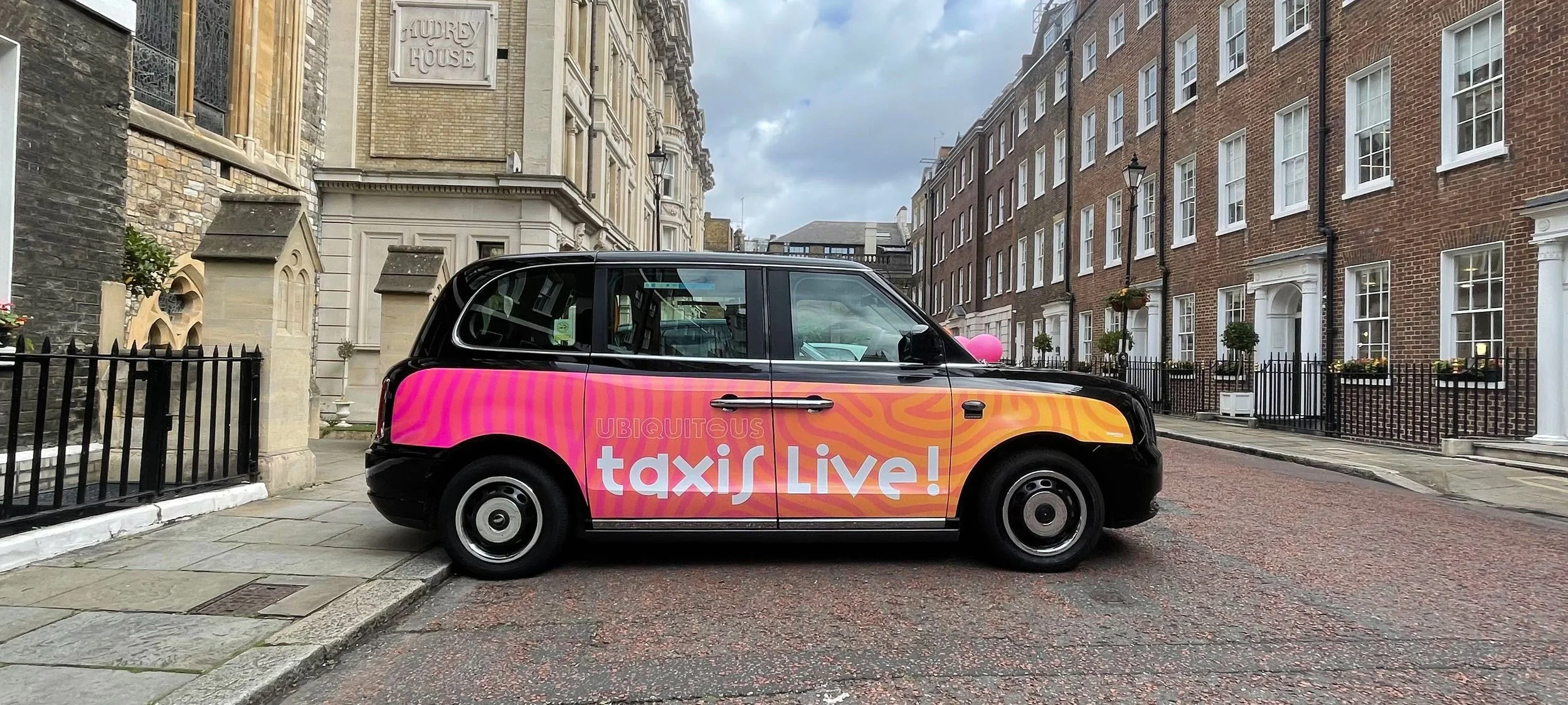
Taxis Live!
How “Dynamic Context” can keep your brand fresh
How do you keep a brand present in a world that always moves?
Attention has become advertising’s definitive metric. As a result, our industry has been at the forefront of brilliant ways to measure it. Eye-tracking benchmarks give us an excellent proxy for how people look at OOH. But as any media planner knows, looking at an ad on a laptop in a quiet room differs from encountering it in the middle of a Tuesday morning commute. At Ubiquitous we began to wonder what might happen if we look at whether examining a ‘real world’ encounter with taxi advertising could tell us something new about how it works.
We commissioned an Attest survey to 1,000 Londoners to examine the possibilities…
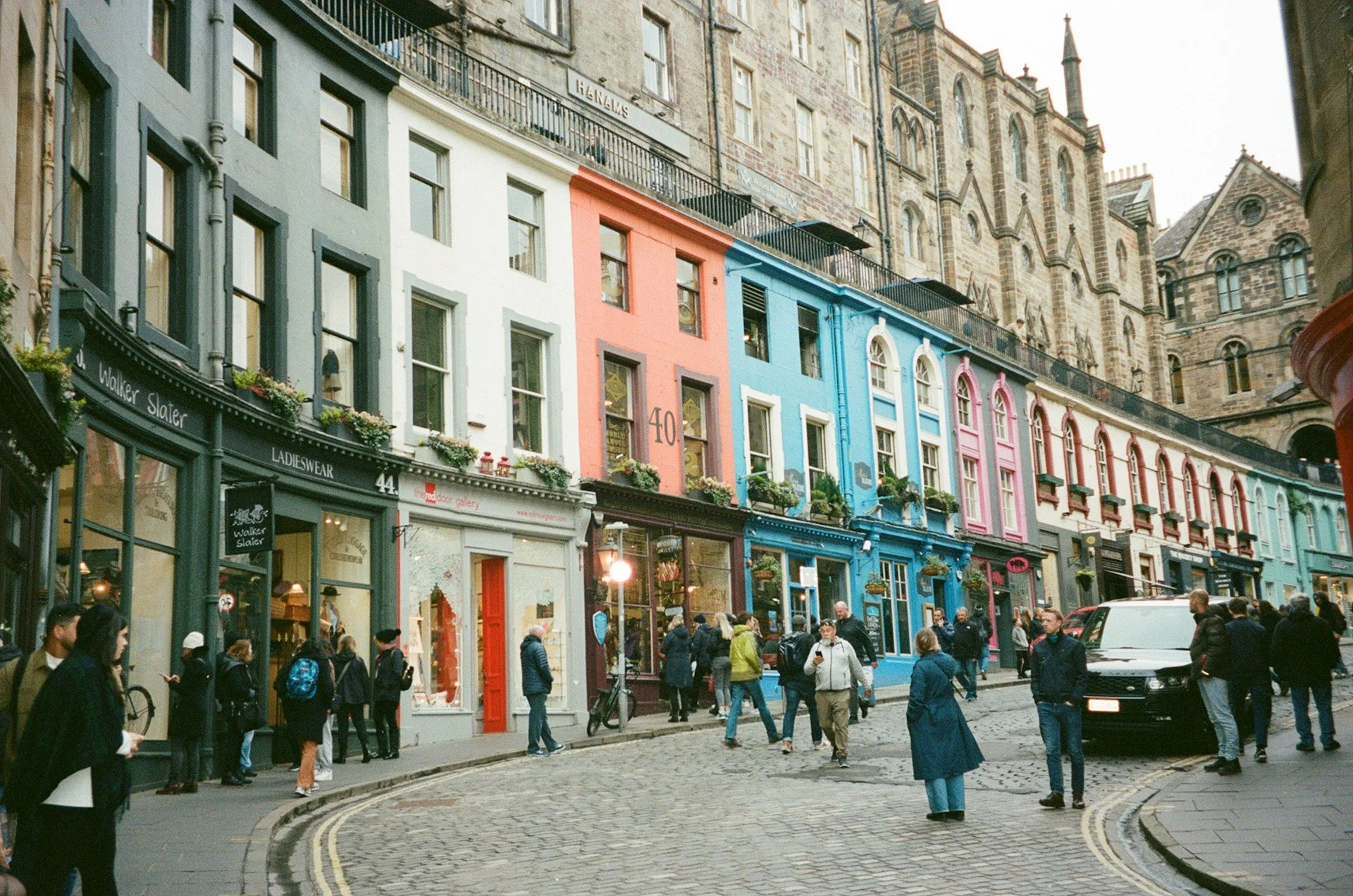
Out in the wild, the public are arguably distracted. People walk dogs, check their phones, or talk to friends. Outside of our industry, advertising rarely forms their primary focus. Around fifteen years ago, Marketing Communications expert Robert Heath described this as Low Involvement Processing. His view? Most advertising works in the background. Audiences absolutely absorb it, but passively. Brand fame builds through repeated, familiar exposures over time. When advertising isn’t a priority for most, this makes asking people about advertising difficult.
However, from 1,000 respondents, only 6% said they never notice taxi advertising, meaning 94% register the format as they go about their day. So taxis are off to a good start! But the risk with pure low involvement processing is that advertising becomes ‘wallpaper’. The human brain saves energy wherever it can and when people travel the exact same route day after day, their minds naturally ignore the background. It is not a flaw in the media; it is simply human nature. And advertising will never be able to change how the brain works, but it could potentially give it a ‘jolt’ once in a while.
Not All Frequency Is Created Equal…
Ubiquitous Attest Research, 2026. 1,000 London-based respondents. Age 21 - 55.
63.3% of Londoners agree that when they notice traditional, fixed-position advertising during their routine, it is explicitly because the advert has been changed. So is that the jolt? But what about the remainder of the campaign?
Imagine your own mobile phone home screen. Your daily apps sit in the same positions. You tap them without looking. But if you shift just one of those icons to a different position, next time you check your phone it suddenly leaps out at you. The icon is identical, but the context has shifted.
A taxi’s position changes continually. You see it in a different street, unexpectedly. The ad is the same, but the shifting environment keeps the message feeling distinct. Taxis provide frequency, certainly, but this also allows them to deliver it with less visual wear-out. This is the mechanic of Dynamic Context.
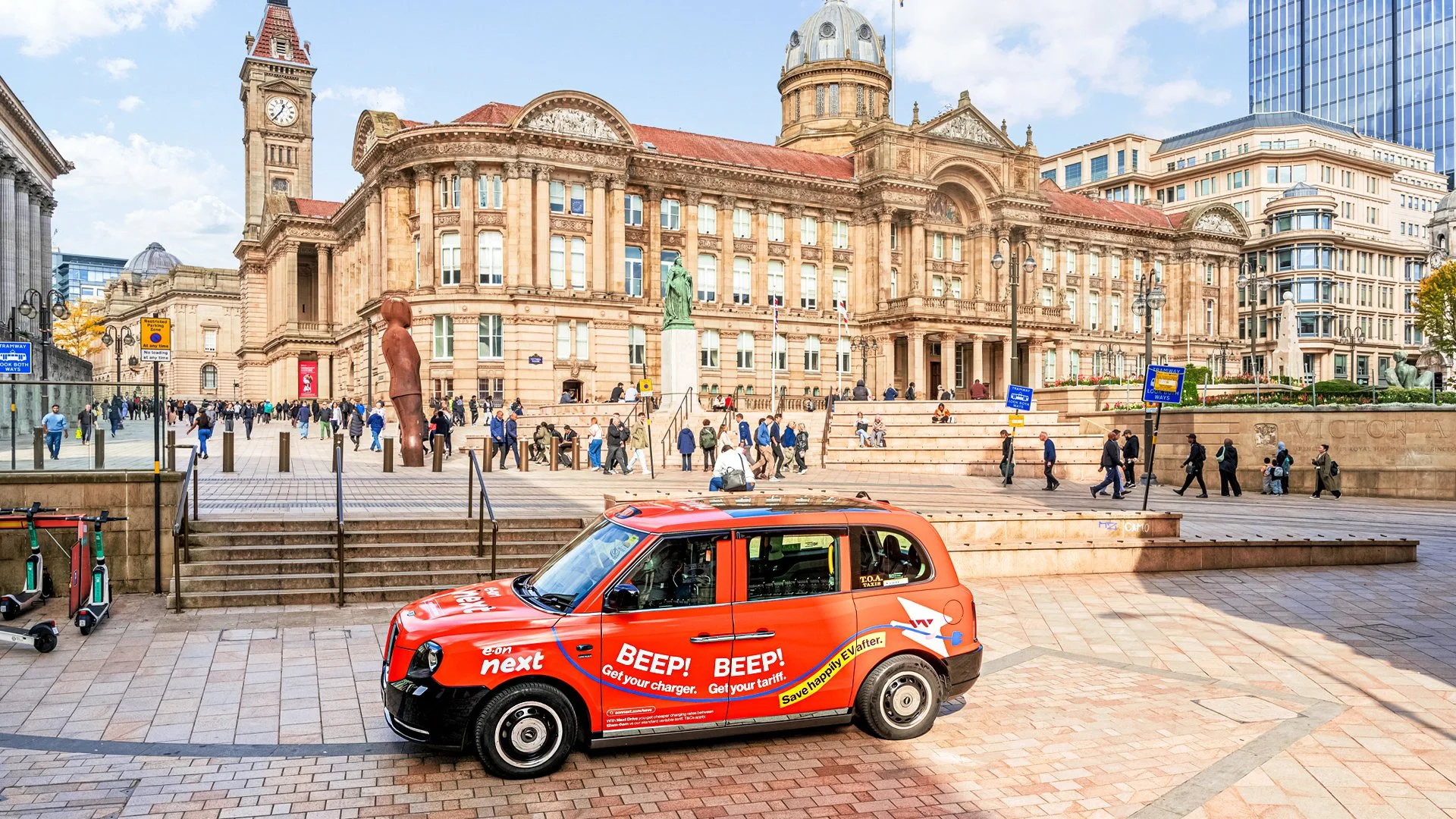
Taxis behave differently
They move.
They cut through static environments.
They appear unexpectedly.
And all those factors increase the likelihood of being noticed.
Why Unpredictability Matters in Advertising
"I notice ads on taxis because they appear in places that are unpredictable."
65% of respondents agree with the statement. By comparison, mobile phone ads score lower, with 52% agreeing (“I notice ads on my mobile…”)
To understand this better, we looked at how people perceive moving physical assets compared to their personal digital screens. Like taxis, mobiles can display advertising at different physical locations on your journeys, so it seemed like a good comparison…
“Taxi advertising usually seems fresh because you see it in different places."
80% of respondents agree. That unpredictability of taxis seems to have the benefit of freshness.
When asked about mobile ads, only 58% agreed.
"Taxi advertising is somehow more memorable because it isn’t digital."
68% of respondents agree. We wanted to understand how physical advertising in the real world compared to the mobile equivalent of ‘Dynamic Context’.
“Adverts on taxis are memorable”
67% of respondents agree with this simple statement. And when it comes to advertising on mobile phones, half of respondents thought them to be memorable.
Ubiquitous Attest Research, 2026. 1,000 London-based respondents. Age 21 - 55.
The Right Place for Memorability
"I notice taxi advertising in locations where there seems to be little or no other advertising visible."
66% of respondents agree. We know taxis access areas with little or no OOH, from The Square Mile to residential streets.
When an asset matches its environment too perfectly, does it run the risk of being easily ignored? Every campaign could benefit from that ‘jolt’ of memorability, but ad buyers know the pressure of a deadline. Tight timelines and uniform assets push a campaign down a single route.
We’ve seen how a taxi advert’s unpredictability means fresh noticeability. But we wanted to pinpoint why…
“Advertising on a taxi attracts my attention because it’s a bit different from the norm.”
76.5% of respondents agree that precisely the unconventional nature of taxi advertising makes for a noticeable OOH format.
Ubiquitous Attest Research, 2026. 1,000 London-based respondents. Age 21 - 55.

Building Trust Through Connection
Within our specially commissioned survey we took the opportunity to prove something we’d always believed to be true: that the iconic black cab being synonymous with trust means that, by association, brands advertising on taxis are also trusted.
When it comes to the statement “I trust black cabs, and that makes me more likely to trust the advertising messages they display” 59% of respondents agree. (With only 15% choosing to disagree outright)
Ubiquitous Attest Research, 2026. 1,000 London-based respondents. Age 21 - 55.
Dynamic Context
To bring this journey to a close, let’s look back at our route.
We began with a fundamental human challenge to advertising: routine blindness, where the brain turns static environments into wallpaper. To beat this habituation, we introduced our Dynamic Context hypothesis. Much like moving a familiar app icon to an unexpected spot on your phone screen, a taxi’s continuous movement shifts the environment around the ad. The copy stays the same, but the changing backdrop provides a recurring jolt of awareness that keeps the message fresh and prevents visual wear-out.
Our proprietary Attest study proved that this physical unpredictability gives moving assets a distinct performance edge over digital feeds and traditional signage. Because taxis travel fluidly through low-clutter spaces and stand out from the norm, they trigger higher noticeability, freshness, and memorability than mobile screens. Furthermore, this street-level presence transfers direct trust to the advertiser, as the public extends their deep respect for the iconic licensed black cab straight to the brand message on the chassis.
Ultimately, media planning is an art of balance. Some briefs need more targeted precision, while others aim for broadcast fame. Ubiquitous taxis are not the only answer, but they can provide a highly specific, complementary value by delivering frequency across changing real-world contexts. Taxis do not simply reach people, but they reach people differently… ensuring your campaign cuts through distractions to remain ubiquitous.
The Who: Demographic Insight
So, when you enlist Ubiquitous to provide audiences with the jolt of Dynamic Context, who exactly are you reaching?
Our research shows that even the average level of agreement with positive statements about taxi advertising is already exceptionally high. Finding robust, statistically significant demographic groups that stand out dramatically above that high average baseline is a high bar to clear.
Yet, when we looked at the data through standard Index Scores (where 100 represents the average for all respondents) we found that the natural routes of taxis align beautifully with some of the highest value audiences, proving that your campaign secures broadcast fame across the whole population while naturally delivering an organic lift precisely where brands want it most. As a snapshot, here are just 4 key audiences worth looking into…



The Tech & IT Sector
Professionals in the technology sectors show a brilliant affinity for the format with agreement with the statement “I often notice and pay attention to taxi advertising” indexing 171, a 71% uplift from the average.

Elite Earners
3 in 4 Professionals with a gross household income of £100,000+ agree “I trust black cabs, and that makes me more likely to trust their advertising messages” (indexing 128). Savvy people surely don’t assign trust lightly, but this statement rang true, as did “Taxi advertising usually seems fresh because you always see it in different places” where a whopping 90% agree (index 117).
Ubiquitous Attest Research, 2026. 1,000 London-based respondents. Age 21 - 55.

Home Owners
This subset has a strong affinity towards agreeing with the statements about taxi advertising, even more often than the norm. 71% agree “I notice ads on taxis because they appear in places that are unpredictable” (index 109) and 68% agree “when I notice billboards during my routine it is because the advert has been changed” (index 108)
The Senior Leader
C-Suite Executives & Business Owners’ commute patterns identified within the survey clearly show that they are in the office more often than the average worker. In the age of flexible working that means taxis are reaching them more often. They are statistically significantly more inclined to agree “I often notice and pay attention to it [taxi ads]” (index 157).
Ready for more?
Which demographics are of interest to you? Ask us about Finance & Banking Professionals or the difference between Single and Cohabiting respondents. To get the informed opinions of Postgraduates & PhD Academics, or step into the shoes of Tastemakers, simply reach out with the contact form below.